
World of Warcraft offers four raid difficulty levels to cater to different player skills and time commitments. You’ll find Raid Finder for casual play, Normal for learning mechanics, Heroic for increased challenges, and Mythic for the ultimate test. Each tier progressively ramps up complexity, coordination requirements, and rewards. Raid Finder provides simplified encounters, while Mythic demands flawless execution and strategy. As you climb the difficulty ladder, you’ll face tougher bosses, more intricate mechanics, and earn better gear. Understanding these tiers helps you choose the right challenge for your group and goals. Exploring each level’s nuances will enhance your raiding experience.
Key Takeaways
- WoW offers four raid difficulty levels: Raid Finder (LFR), Normal, Heroic, and Mythic, each with increasing complexity and rewards.
- Raid Finder is entry-level with simplified mechanics, while Mythic represents the pinnacle of raiding with intricate strategies.
- Higher difficulties feature increased boss health, damage output, and more complex mechanics requiring greater coordination and skill.
- Gear quality and item levels improve progressively from LFR to Mythic, incentivizing players to tackle harder content.
- Raid lockouts, composition strategies, and role-specific considerations vary across difficulty levels, affecting overall raid progression and success.
Raid Finder: Casual Raiding Experience
Raid Finder, World of Warcraft’s entry-level raiding experience, offers casual players a chance to explore endgame content without the demands of higher difficulty modes. This accessible option is designed for beginners, providing simplified mechanics and reduced coordination requirements. You’ll find that Raid Finder emphasizes social aspects and group dynamics, allowing you to learn raid etiquette and develop teamwork skills in a lower-pressure environment.
To succeed in Raid Finder, focus on casual strategies that prioritize understanding basic mechanics over perfecting complex rotations. Familiarize yourself with accessibility options to enhance your gameplay experience. As you progress, you’ll notice the importance of class balance in creating effective groups, though it’s less important at this difficulty level.
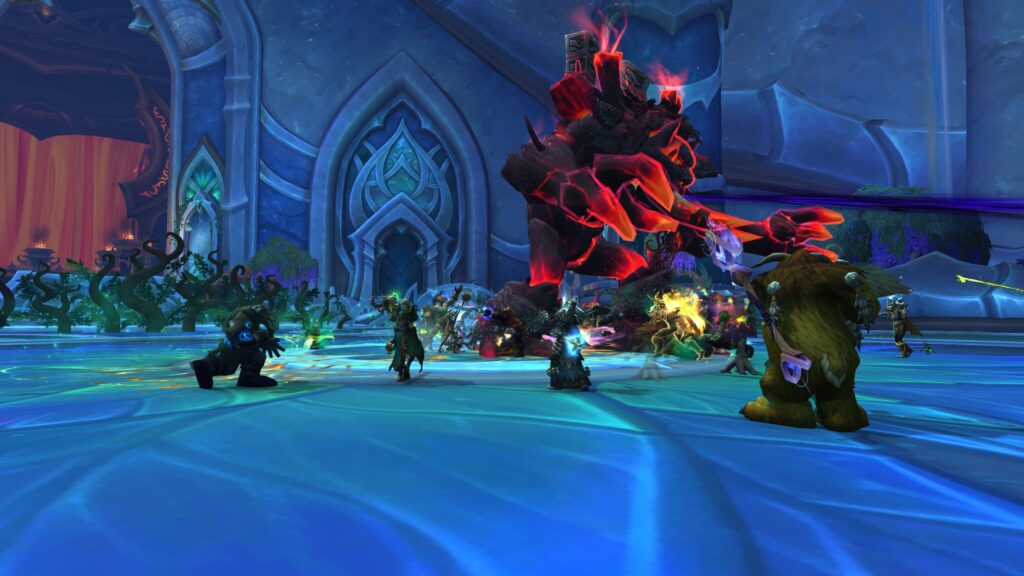
Time commitment for Raid Finder is greatly lower than other modes, making it ideal for players with limited schedules. Set realistic goals for yourself, such as learning boss mechanics or improving your performance over time. Remember, while Raid Finder is more forgiving, maintaining proper raid etiquette and contributing to the group’s success are still essential. By mastering these beginner tips and embracing the casual nature of Raid Finder, you’ll build a solid foundation for potentially tackling more challenging raid difficulties in the future.
Normal Difficulty: Stepping Stone
A logical progression from Raid Finder, Normal difficulty serves as an important stepping stone for players looking to advance their raiding skills. This level introduces more complex mechanics and requires a higher level of coordination among raid members. You’ll find that Normal difficulty strikes a balance between accessibility and challenge, making it an ideal training ground for aspiring raiders.
In Normal mode, you’ll encounter increased damage output from bosses and adds, along with additional mechanics that demand better situational awareness. This difficulty level is designed to test your ability to execute basic strategies while maintaining consistent performance. It’s essential for developing raid awareness, improving rotation execution, and fostering teamwork.

Normal raids play a significant role in player motivation, offering a sense of accomplishment as you overcome more significant challenges. You’ll earn better gear rewards compared to Raid Finder, further incentivizing your progression. This difficulty level also helps you familiarize yourself with the raid’s layout, boss abilities, and overall flow, preparing you for higher difficulties.
As you tackle Normal raids, you’ll develop the fundamental skills necessary for more challenging content, setting the stage for your eventual shift to Heroic difficulty.
Heroic Raids: Challenging Group Content
Three key factors distinguish Heroic raids as the premier challenging group content in World of Warcraft: increased complexity, heightened coordination requirements, and superior rewards. Heroic difficulty ramps up the intensity of encounters, demanding superior gameplay and teamwork from all participants. You’ll face tougher boss mechanics, higher damage output, and stricter time limits, pushing your group’s skills to the limit.
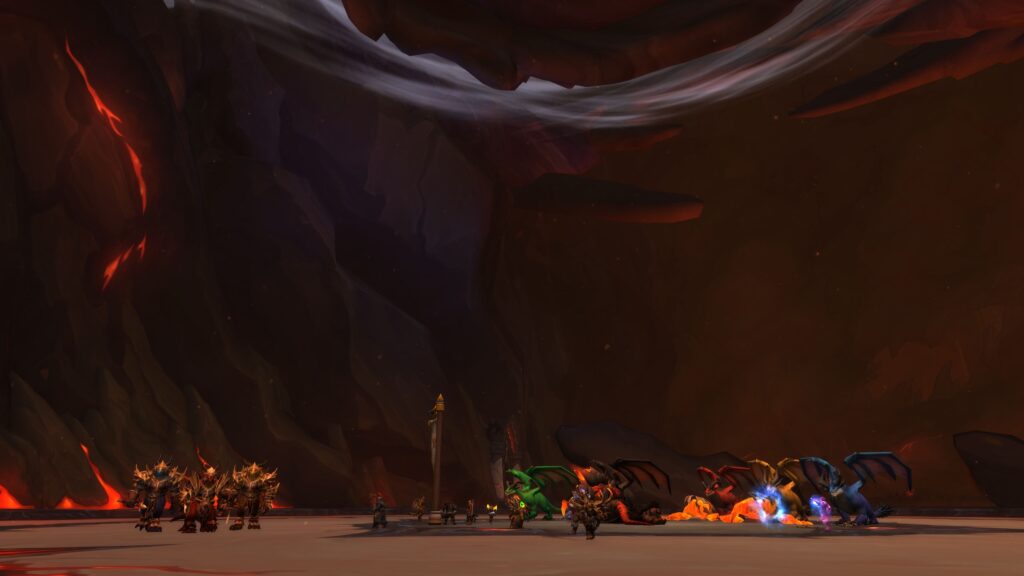
Heroic teamwork becomes essential as individual mistakes can quickly lead to wipes. You’ll need to master intricate heroic boss strategies, often involving complex positioning, precise ability timing, and flawless execution of mechanics. Communication and coordination among raid members are paramount, with each player’s role becoming increasingly important to success.
The heightened challenge of Heroic raids is balanced by more prestigious rewards:
- Higher item level gear
- Unique mounts and titles
- Achievements that showcase your skill
Heroic raids serve as a proving ground for skilled players, offering a satisfying middle ground between Normal and Mythic difficulties. They provide an excellent opportunity to test your abilities, improve your gameplay, and earn coveted rewards without the extreme time commitment required for Mythic progression. As you tackle Heroic raids, you’ll experience some of WoW’s most engaging and rewarding group content.
Mythic: The Ultimate Test
Mythic raids represent the pinnacle of World of Warcraft’s group content, demanding exceptional coordination and skill from your team. You’ll face the most intricate mechanics and toughest enemies, requiring flawless execution and strategic planning to overcome. Successfully conquering these challenges rewards you with the game’s most coveted gear, titles, and mounts, cementing your status as an elite player in the WoW community.
Extreme Coordination Required
How does Mythic difficulty push World of Warcraft raids to their absolute limits? It demands extreme coordination from every raid member, testing the group’s collective skills and teamwork to the maximum. Mythic raids require impeccable team synergy and flawless communication tactics to overcome their intense challenges. Role assignment becomes vital, with each player needing to execute their specific tasks perfectly while maintaining situational awareness of the entire encounter.
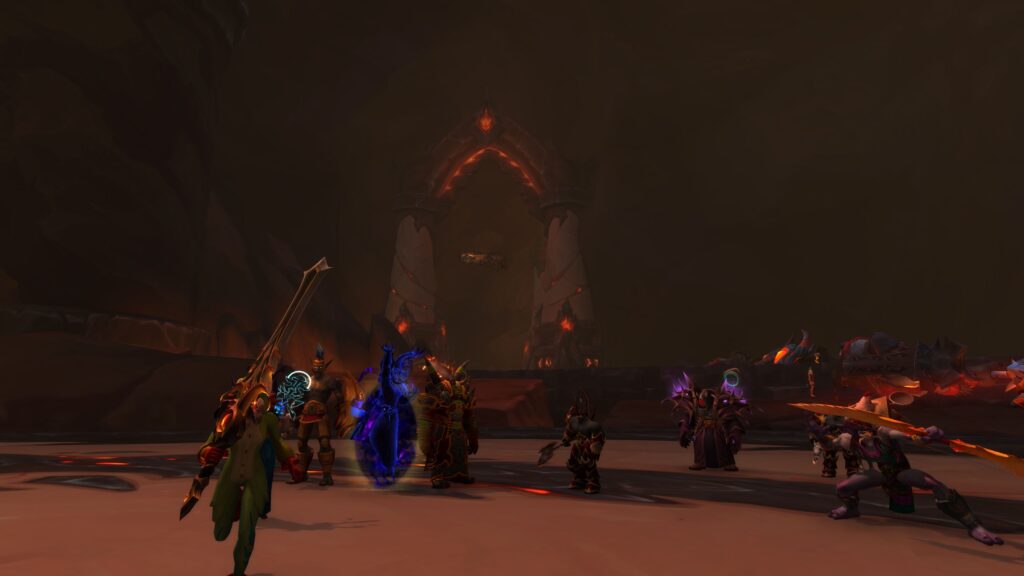
Timing coordination is paramount in Mythic raids, where split-second decisions can mean the difference between success and failure. You’ll need to develop adaptability training to respond to dynamic fight mechanics and unexpected situations. Strategy refinement is an ongoing process, as you’ll often need to adjust your approach based on your group’s strengths and weaknesses.
Key aspects of Mythic raid coordination include:
- Constant communication and call-outs for critical information
- Precise movement and positioning to avoid mechanics and maximize damage
- Flawless execution of complex, multi-phase strategies
Stress management becomes essential as the difficulty ramps up. You’ll need to maintain focus and composure under pressure, working together to overcome seemingly insurmountable challenges. Mythic raids truly test the limits of your team’s coordination and skill.
Prestigious Rewards Await
Conquering Mythic raids offers the most prestigious rewards in World of Warcraft, befitting the ultimate test of skill and coordination. You’ll earn exclusive titles that showcase your accomplishments, setting you apart from casual players. Unique appearances for your gear, including coveted tier sets, allow you to visually display your prowess in the game’s most challenging content.
Prestigious mounts are often tied to Mythic raid achievements, giving you rare and eye-catching ways to travel Azeroth. You’ll also have the chance to obtain legendary pets, further expanding your collection with hard-to-get companions. Rare achievements await those who can overcome these formidable challenges, often tied to seasonal events that add an extra layer of exclusivity.
For the most dedicated players, Mythic raids offer the opportunity to compete for world firsts. Renowned guilds vie for these coveted titles, earning community recognition and cementing their place in WoW history. As you progress through Mythic difficulties, you’ll not only improve your skills but also gain respect within the raiding community, potentially opening doors to join elite guilds and tackle even greater challenges.
Gear and Rewards Breakdown
The gear and rewards structure in World of Warcraft’s raid difficulty system is intricately designed to incentivize player progression. As you tackle increasingly challenging content, you’ll find that the quality and power of gear drops scale accordingly. This reward scaling mechanism guarantees that your efforts are consistently rewarded, driving you to push your limits and advance through the difficulty tiers.
At each level, you’ll encounter distinct gear acquisition opportunities:
- Looking For Raid (LFR): Entry-level gear with lower item levels
- Normal: Improved gear with higher stats and unique appearances
- Heroic: Powerful items with enhanced special effects and visual upgrades
- Mythic: Top-tier gear with the highest item levels and exclusive aesthetics
The gear progression system doesn’t stop at initial drops. You’ll have access to various item upgrade methods, allowing you to further enhance your equipment. These can include valor points, crafting materials, or special tokens obtained from raid bosses. As you climb the difficulty ladder, you’ll notice that not only does the base item level of gear increase, but so does the potential for upgrades. This layered approach to rewards guarantees that even seasoned raiders continue to find value in conquering challenging content, maintaining engagement and promoting long-term gameplay satisfaction.
Mechanical Differences Between Difficulties
As you progress through higher raid difficulties in World of Warcraft, you’ll encounter significant mechanical differences. Boss health pools and damage output increase substantially, requiring more efficient healing and damage mitigation strategies. Additionally, you’ll face enhanced or entirely new encounter-specific mechanics that demand greater coordination and execution from your raid team.
Boss Health and Damage
Among the most noticeable differences between raid difficulty levels in World of Warcraft are the changes to boss health and damage output. As you progress from lower to higher difficulties, you’ll encounter a significant increase in both the boss’s health pool and the damage they inflict on players.
Health scaling is particularly pronounced, with bosses in higher difficulties often having two to three times more health than their lower-difficulty counterparts. This increased health pool requires raid teams to maintain consistent damage output for longer periods, testing their endurance and resource management skills. Similarly, boss damage scales up considerably, putting more pressure on healers and forcing players to execute mechanics flawlessly to avoid unnecessary damage.
The impact of these changes on raid strategy and player performance can’t be overstated:
- Higher boss health demands better sustained DPS and more efficient use of cooldowns
- Increased boss damage requires tighter healing coordination and improved personal survivability
- Extended fight durations test players’ ability to maintain focus and execute mechanics consistently
Understanding these scaling factors is essential for raid leaders and players alike, as they directly influence team composition, strategy formulation, and overall raid preparation. By adapting to these increased demands, you’ll be better equipped to tackle the challenges of higher difficulty raids.
Encounter-Specific Mechanics Changes
While boss health and damage scaling are significant factors in raid difficulty, encounter-specific mechanics changes often present the most substantial challenges as you progress through difficulty levels. These alterations force you to adapt your encounter strategies and can dramatically increase the complexity of fights.
In lower difficulties, mechanics may be simplified or entirely absent. As you move to higher levels, you’ll face additional mechanics or more punishing versions of existing ones. For example, a boss might gain extra abilities, spawn more adds, or require stricter positioning. Mechanic balancing is essential, with higher difficulties demanding tighter coordination and quicker reactions from your raid team.
You’ll notice that some mechanics become more unforgiving, leaving less room for error. A ability that was survivable in Normal might become lethal in Heroic or Mythic. Time-sensitive mechanics often have shorter windows for execution, and area effects may cover larger portions of the arena. Additionally, you may encounter entirely new phases or mechanics in Mythic difficulty, requiring you to master completely different strategies for encounters you thought you knew.
Progression and Lockouts Explained
Several key aspects govern raid progression and lockouts in World of Warcraft. You’ll find that raid progression is closely tied to lockout mechanics, which limit your ability to repeatedly attempt encounters within a given timeframe. This system is designed to balance gear accessibility and player incentives, ensuring a steady progression curve while maintaining challenge.
Difficulty scaling plays a vital role in raid progression, with each tier offering increasingly complex encounters. You’ll notice that:
- Higher difficulties provide better gear rewards
- Lockouts are typically shared across difficulty levels
- Some mechanics may only appear in higher difficulties
As you progress through raid tiers, you’ll experience encounter balancing that’s tailored to challenge your group’s increasing skill and gear level. This tiered reward system encourages you to tackle more difficult content for better loot.
Group dynamics also play a significant role in progression. You’ll need to coordinate with your team to overcome increasingly complex mechanics and tighter enrage timers. Understanding lockout mechanics is essential for efficient progression, as it affects how often you can attempt encounters and receive loot. By mastering these systems, you’ll optimize your raid team’s progression and gear acquisition.
Choosing the Right Difficulty
Selecting the appropriate raid difficulty is a key decision that impacts your progression and overall experience. When choosing a difficulty level, you’ll need to evaluate your group’s skill level, gear, and available time. LFR offers the highest raid accessibility, allowing casual players to experience content with minimal commitment. Normal difficulty strikes a balance between challenge and accessibility, suitable for organized groups looking to progress steadily.
Heroic difficulty ramps up the challenge, requiring better coordination and gear. It’s ideal for dedicated raiders seeking to push their limits without the extreme demands of Mythic. Mythic difficulty represents the pinnacle of raiding, designed for highly skilled and well-geared groups willing to invest significant time and effort.
Assess your goals when selecting a difficulty. Are you aiming for world-first achievements, or do you prefer a more relaxed approach? Your choice will affect player engagement, as higher difficulties often provide more longevity and satisfaction for experienced raiders. However, they may also lead to burnout if your group isn’t prepared for the challenge. Evaluate your raid team’s capabilities honestly, and don’t hesitate to adjust your chosen difficulty as you progress and improve.
Raid Composition and Strategy Tips
Successful raid composition and strategy often hinge on a delicate balance of roles and abilities. When assembling your raid team, focus on ideal roles and class composition to maximize team synergy. Consider the specific encounter requirements and adjust your lineup accordingly. Utility importance can’t be overstated; bring classes that offer essential buffs, debuffs, and crowd control abilities.
Effective communication strategies are critical for raid success. Establish clear channels for conveying important information and coordinating actions. Implement positioning tactics that account for encounter mechanics and maximize damage output while minimizing risk. Thorough encounter preparations should include:
- Assigning specific roles and responsibilities
- Discussing cooldown management for both offensive and defensive abilities
- Establishing healing priorities and damage distribution plans
During the raid, maintain constant awareness of your surroundings and adapt to changing situations. Coordinate cooldowns to overcome challenging phases and facilitate smooth progression. Healers should prioritize tank survival while efficiently managing group-wide damage. DPS players must balance personal output with mechanics execution and occasional utility tasks.
Remember that raid success is a collaborative effort. Encourage open communication, constructive feedback, and a willingness to adapt strategies as needed. With proper planning and execution, you’ll be well-equipped to tackle even the most challenging raid encounters.
Frequently Asked Questions
Can I Switch Between Difficulty Levels Mid-Raid?
When it comes to raid difficulty shifts, you can’t switch between levels mid-raid. Raid fluidity is limited to pre-raid decisions. Once you’ve entered, you’re locked into your chosen difficulty. This guarantees consistent challenge and reward structures throughout the encounter. However, you can adjust difficulty for subsequent raid wings or when resetting the instance. It’s essential to plan ahead and communicate with your team to select the appropriate difficulty before starting the raid.
How Often Are New Raids Released in World of Warcraft?
Picture a tidal wave of excitement crashing over millions of players! You’ll find new raids rolling out like clockwork in World of Warcraft. The raid release frequency typically follows a raid tier schedule, with major content drops every 5-7 months. You’ll usually see 3-4 raid tiers per expansion, each introducing fresh challenges and gear progression. Blizzard’s punctual releases keep you on your toes, ensuring you’re always gearing up for the next big adventure. Stay alert for announcements to plan your raiding calendar!
Are There Any Advantages to Raiding With a Consistent Group?
You’ll find numerous advantages to raiding with a consistent group. Team synergy develops over time, enhancing your overall performance. You’ll refine communication strategies, leading to smoother executions. Role mastery becomes second nature as you understand each other’s playstyles. Progressive improvement is evident as you tackle challenges together. Loot distribution becomes more equitable and less contentious. Scheduling benefits are significant, with set raid times accommodating everyone’s commitments. Ultimately, a consistent raid group fosters a sense of camaraderie and shared accomplishment that’s hard to replicate with random teams.
Do Raid Difficulties Affect the Storyline or Lore Progression?
You’re barking up the wrong tree if you think raid difficulties markedly alter the storyline or lore progression. While they don’t directly impact the narrative, different difficulties can influence your perception of lore implications. Higher difficulties may enhance the player experience, making bosses feel more formidable and aligning with their narrative significance. However, the core storyline remains consistent across difficulties. Your chosen difficulty primarily affects gameplay challenge rather than altering the fundamental lore elements presented in raids.
Can I Earn Achievements on Lower Difficulty Levels?
You can earn achievements on lower difficulty levels, but some are specific to higher difficulties. Achievement rewards often scale with difficulty, offering more prestigious rewards for tougher challenges. While you’ll gain access to many achievements on easier settings, you’ll miss out on certain difficulty-specific ones. It’s crucial to recognize that some achievements require completing content on higher difficulties, encouraging you to push your limits. Ultimately, the difficulty scaling system allows you to progress and earn achievements at your own pace.
Conclusion
You’ve now gained a thorough understanding of WoW’s raid difficulty tiers. Armed with this knowledge, you’re ready to tackle challenges suited to your skill level and goals. Curiously, only 2% of raiders typically clear Mythic difficulty while it’s current content. This statistic underscores the extreme challenge of top-tier raiding. Whether you’re aiming for Cutting Edge or enjoying casual runs, there’s a raid difficulty that’ll provide the experience you’re seeking in Azeroth.